

TL;DR
SQL Server Management Studio (SSMS) is Microsoft's free tool for managing SQL Server. Download it from the official Microsoft Learn page, then run the standalone vs_SSMS.exe installer to set it up.
- SSMS download link: learn.microsoft.com/en-us/ssms/install/install (avoid third-party sites with fake or outdated versions).
- The installer is a small file (named something like vs_SSMS.exe) that pulls components during setup; run it as Administrator.
- SSMS needs 64-bit Windows 10/11 (or Windows Server 2016+) and .NET Framework 4.8 or newer.
If you use SQL Server, you need SSMS. It’s the main tool for managing SQL databases on Windows. This guide will help you download, install, and set up SQL Server Management Studio (SSMS) in 2025.
What is SSMS?
SQL Server Management Studio (SSMS) is the primary tool for managing Microsoft SQL Server. It’s a free application developed by Microsoft that offers a comprehensive interface for connecting to SQL Server, running queries, managing security, backups, jobs, and more.

- Key features:
- Query editor: Write and execute T-SQL scripts.
- Object Explorer: Browse databases, tables, views, and procedures.
- Security management: Manage logins, permissions, and authentication.
- SQL Server Agent: Create and monitor scheduled jobs.
- Monitoring tools: Activity Monitor, Query Store, execution plans.
Whether working on a local server, Azure SQL Database, or a hybrid setup, SSMS offers consistent management.
Why Use SSMS in 2025?
Despite newer tools like Azure Data Studio, SSMS remains the industry standard.
Reasons to choose SSMS 21:
- Full feature support: Access to tools like SQL Server Agent, Replication, Database Mail, and more.
- Wide compatibility: Works with SQL Server 2008 R2 through 2022, plus Azure SQL and Managed Instances.
- Unified interface: Development, tuning, and admin all in one app.
- Microsoft-supported: Regular updates with bug fixes and new capabilities.
- 64-bit architecture (new in SSMS 21): Improved performance and memory handling.
- Integrated Git/GitHub support
- Azure Tenant selector during authentication
Bottom line: If you're managing SQL Server professionally, SSMS 21 is your best option.
System Requirements for SSMS 21
Minimum system requirements:
| Item | Details |
|---|---|
| Operating System | Windows 10, 11, or Windows Server 2016+ |
| Architecture | 64-bit (x64 only) |
| .NET Framework | 4.8 or newer |
| RAM | 4 GB minimum; 8+ GB recommended |
| Disk Space | 1 GB for SSMS, 6.5 GB+ for SQL Server |
| Internet | Required for download and updates |
Where to Download SSMS
You Always download SSMS from the official Microsoft website to avoid fake or outdated versions. Visit the Microsoft Learn page for SSMS installation and download the latest SSMS 21.x installer, usually named something like vs_SSMS.exe. The installer file is lightweight because it downloads components during setup. Microsoft frequently releases updates; as of May 2025, version 21.1.3 is the most recent.
Go to Install SQL Server Management Studio | Microsoft Learn
- Click "Download SSMS 21.x". You’ll get a small installer (e.g., vs_SSMS.exe).
- Save the file to your computer.
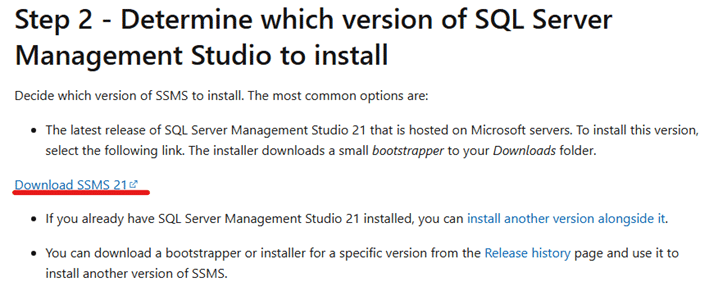
Note: Microsoft updates SSMS frequently. At time of writing, 21.1.3 is the latest (May 2025).
How to Install SSMS 21
The latest version of SSMS is now installed through the Visual Studio Installer, which is a change from older versions that used a standalone installer. This modern approach allows you to manage SSMS alongside other Microsoft tools, and easily add optional components like GitHub integration or Azure Data Studio. Make sure to run the installer as Administrator to avoid permission issues.
Step-by-step installation:
- Run vs_SSMS.exe as Administrator.
- Visual Studio Installer opens. Select "SQL Server Management Studio" workload.
- (Optional) Add components like:
- GitHub/Git Integration
- Azure Data Studio
- Migration/Data Tier apps
- Accept License Terms
- Click Install
- Wait 5–10 minutes
- Click Close when done
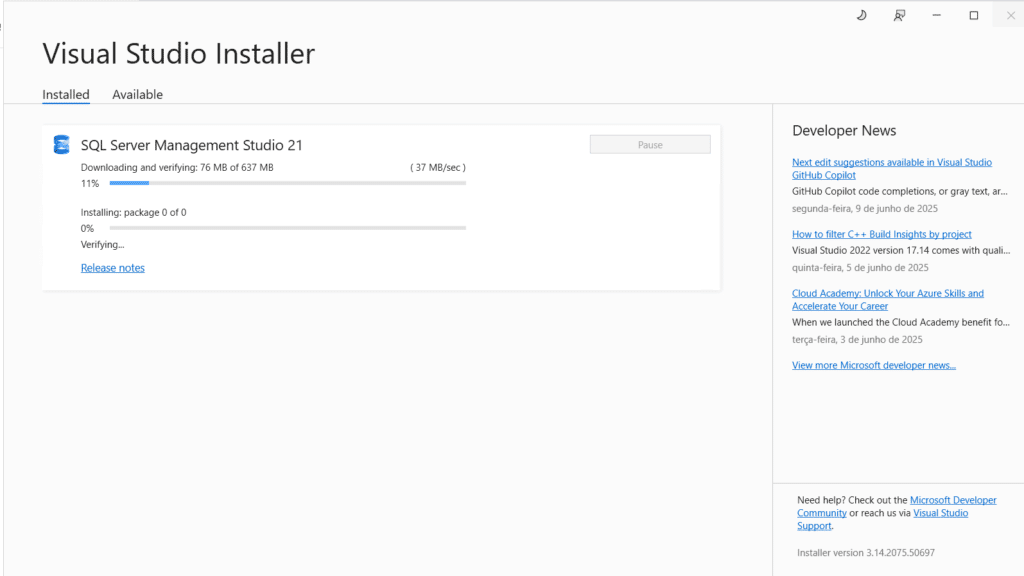
Reboot if prompted after installation completes.
(Optional) Installing SQL Server (Developer Edition)
SSMS is just the management interface and does not come with the SQL Server database engine itself. If you want a local SQL Server environment for development or testing, download the Developer Edition from Microsoft’s official download page. Choose the Basic installation option for a quick setup. Pay attention to the instance name during installation, commonly MSSQLSERVER for default or SQLEXPRESS for lightweight installs, because you will need it to connect from SSMS
To set up a local environment:
- Visit microsoft.com/en-us/sql-server/sql-server-downloads
- Under Developer Edition, click Download now
- Run the installer, select Basic installation
- Accept the license and proceed
- Note the instance name (e.g., MSSQLSERVER or SQLEXPRESS)
First-Time Setup and First Query
To connect:
- Launch SSMS
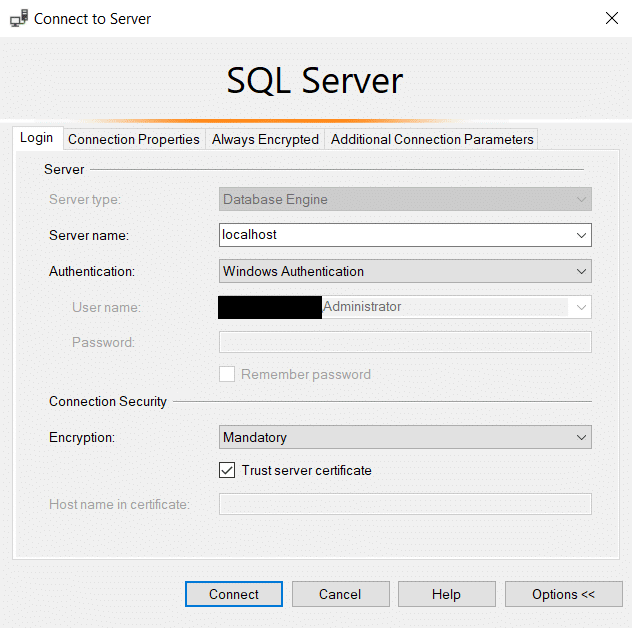
- In the "Connect to Server" window:
- Server Type: Database Engine
- Server Name: (localhost) or .\SQLEXPRESS or hostname\instance
- Authentication: Windows Authentication (recommended)
- Click Connect
First query:
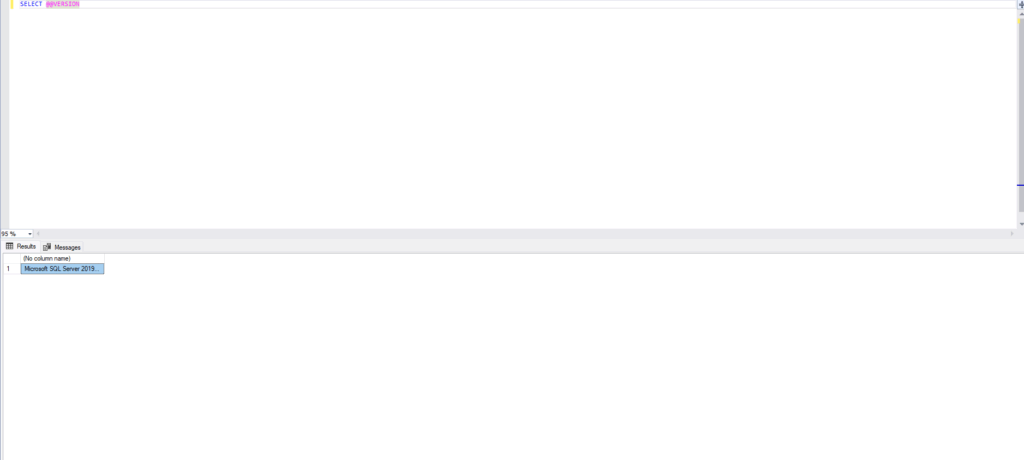
- Click New Query and paste:
SELECT @@VERSION;- Press F5 or click Execute

Keeping SSMS Up to Date
Like any software, SSMS works best when it’s running the latest version - bug fixes, new features, and fewer surprise errors.
If you’re not sure how to check for updates in SSMS, we’ve covered the whole process (with screenshots) in our guide: How to Check for Updates in SQL Server Management Studio (SSMS). Head there for a quick walkthrough on keeping your tools current.
Bonus Tip: How to Enable Dark Mode in SSMS 21
If you find yourself squinting at your screen after a few hours in SSMS, you’re in luck: SSMS 21 has joined the dark side (officially)! Thanks to its new Visual Studio 2022 theming engine, you can swap out the classic blinding brightness for something a little easier on the eyes.
To activate Dark Mode:
- Open SSMS
- Go to Tools > Options
- Navigate to Environment > General
- Under "Color theme", choose Dark
- Click OK
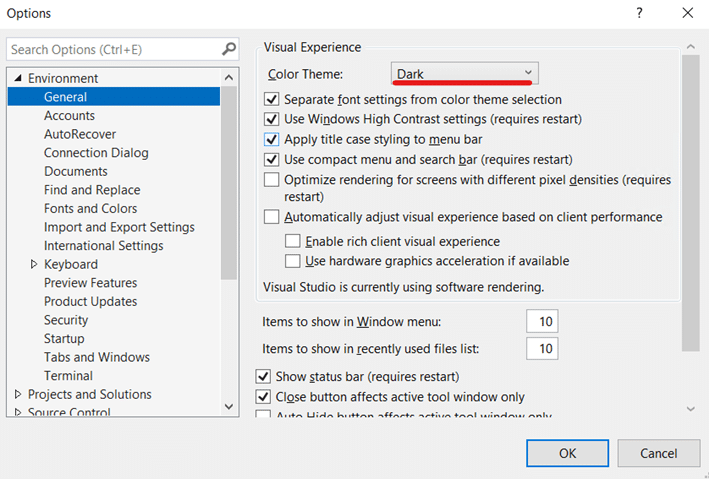
Note: SSMS 21.1.3 improves contrast in menus and dialogs compared to earlier builds.
Useful Keyboard Shortcuts for Beginners
Here are some useful keyboard shortcuts to get you started with SSMS. Learning a few of these will save you time and improve your workflow:
| Action | Shortcut |
|---|---|
| Run Query | F5 |
| Comment/Uncomment Line | Ctrl + K, Ctrl + C / Ctrl + U |
| Format SQL Code | Ctrl + K, Ctrl + D |
| Show Object Explorer | F8 |
| New Query Window | Ctrl + N |
Learning a few shortcuts will save you time and improve your workflow.
Common Problems and Mistakes
❌ Problem 1: Not running installer as Admin
- Fix: Right-click the installer and select "Run as Administrator"
❌ Problem 2: Using SSMS 18.x with SQL Server 2022+
- Use SSMS 21+ for full feature support and UI compatibility
❌ Problem 3: Assuming SSMS installs SQL Server
- Install SQL Server engine separately (Developer or Express)
❌ Problem 4: Missing .NET Framework 4.8+
- Fix: Update Windows or manually install .NET Framework before setup
❌ Problem 5: Confusing SSMS with SQL Server
- SSMS is the interface — you still need to install the SQL Server engine to actually store and query data
❌ Problem 6: Using wrong server name in first connection
- Fix: Double-check instance name during installation. Try localhost, . or hostname\instance

